Photos, Phones and the Silence
Ticket or guided tour?There is no separate ticket for the Sistine Chapel: it is the last room of the Vatican Museums, and every ticket to the museums includes it. What you choose is a timed entry slot on your own, or a guide who walks you through the galleries and explains the ceiling before you go in, where talking is not allowed.
Compare the optionsWhat the rules say
The visitor rules allow photos “for personal and domestic use only” in all areas of the museums, apart from the Sistine Chapel, and forbid flash everywhere. In the chapel they go further: no photographs or films with any kind of electronic equipment, no use of mobile phones, and absolute silence. So in the Raphael Rooms or the Gallery of Maps, take all the pictures you like with the flash off. Once you pass through the chapel door, the phone goes in your pocket.
Why you have to be quiet
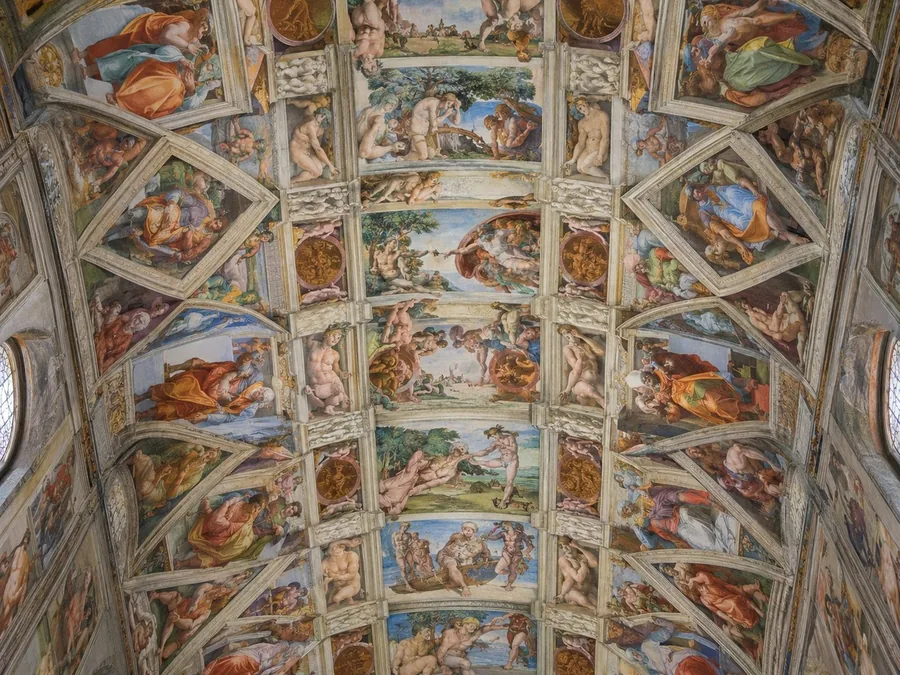
The Sistine Chapel is not a gallery that happens to have a painted ceiling. It was consecrated on 15 August 1483, dedicated to the Assumption, and it is still used for papal liturgies and as the room where cardinals elect a pope. Silence is what you would be asked for in any church during a service. In practice the room is never actually silent. Hundreds of people murmur, and every few minutes a guard calls out “Silenzio” and the noise drops for a while. It is part of the visit, and I have come to like it.
Why no photos? What is documented
The rules state the ban without giving a reason. The explanations you hear are protecting the frescoes from flash, keeping a packed room moving, respect for a consecrated space, and the Vatican’s control of images of its own works. All of them are plausible; none has been published as the official basis of the rule.
The story you will hear most often is that a Japanese TV company owns the rights. There is a real history behind it. Nippon Television funded the restoration of the frescoes in the 1980s and 1990s in exchange for exclusive photo and film rights, but that exclusivity expired three years after each phase was finished, for the Last Judgment in about 1997. The ban has continued long after it. Treat the copyright explanation as an outdated or partial myth. The restoration itself is on the history page.
What happens if you take one
Guards patrol the room and are quick. What visitors widely report, and what I have watched many times, is a guard calling “No photo”, pointing, and telling the person to put the phone away, sometimes to delete the picture. No official penalty is published, so I will not claim fines or anyone being thrown out. You will be told off in front of a few hundred people, which is enough for most.
Leanne, on the plain ticket, wrote that she was “sad I wasn’t able to take the one pic everyone wants”. I understand it, but the ceiling is 20 m up and a phone photo of it would disappoint you anyway.
Can I bring my camera?
Yes. A camera or phone in your bag is fine, and you can use it everywhere else on the route. The rules send video cameras, tripods and photo stands to the cloakroom, forbid telescopic selfie sticks and drones, and ban professional equipment. The full list is on what to bring.
The practical answer: hear it before you go in
If nobody may talk inside, the explaining has to happen outside. This is the real case for a guide, more than skipping any line. Guides stop in the rooms before the chapel and walk you through what you are about to see. Samantha’s guide did it in the queue. Then you go in and look in silence, knowing where the Creation of Adam is and what Minos has round his waist. The argument is laid out in guided tour or ticket.
Frequently asked questions
Why can’t you take pictures in the Sistine Chapel?
Because the Vatican Museums’ rules forbid photos and filming in the chapel, without giving a reason. Flash damage, crowd flow, respect for a consecrated chapel and image rights are the usual explanations. The Japanese TV rights story is outdated: that exclusivity ended in the 1990s.
Why can’t you talk in the Sistine Chapel?
It is a consecrated chapel, still used for papal liturgies and the conclave, and the rules ask for absolute silence. Its history is on the history page.
What happens if you take a picture in the Sistine Chapel?
Visitors report a guard calling “No photo” and telling them to put the phone away or delete the image. No official penalty is published.
Can I take photos in the rest of the Vatican Museums?
Yes, for personal use and without flash, everywhere except the Sistine Chapel.
Can I bring a camera to the Vatican Museums?
Yes. Keep it in your bag in the chapel. Video cameras, tripods and stands go to the cloakroom, and selfie sticks and drones may not be used. Details on what to bring.